The Z Scale Framework
A diagnostic system for measuring and improving employee engagement. Built on decades of research, synthesizing the Theory of Constraints with human motivation science.
The Human Constraint
Goldratt's Theory of Constraints taught us that every system has a bottleneck. For 50 years, we've applied this to machines, inventory, and processes. We've missed the obvious: the constraint is usually human.
Not because people aren't capable. Because the environment has taught them that capability is dangerous. Excellence draws criticism. Innovation threatens hierarchies. Caring leads to disappointment.
The Human Constraint isn't about capacity. It's about engagement—and engagement responds to environment, not training.
"The Zombie state is not permanent. It is a reversible adaptation to a devaluing environment. Inside almost every Zombie is a Dormant Zealot waiting for it to be safe to return."
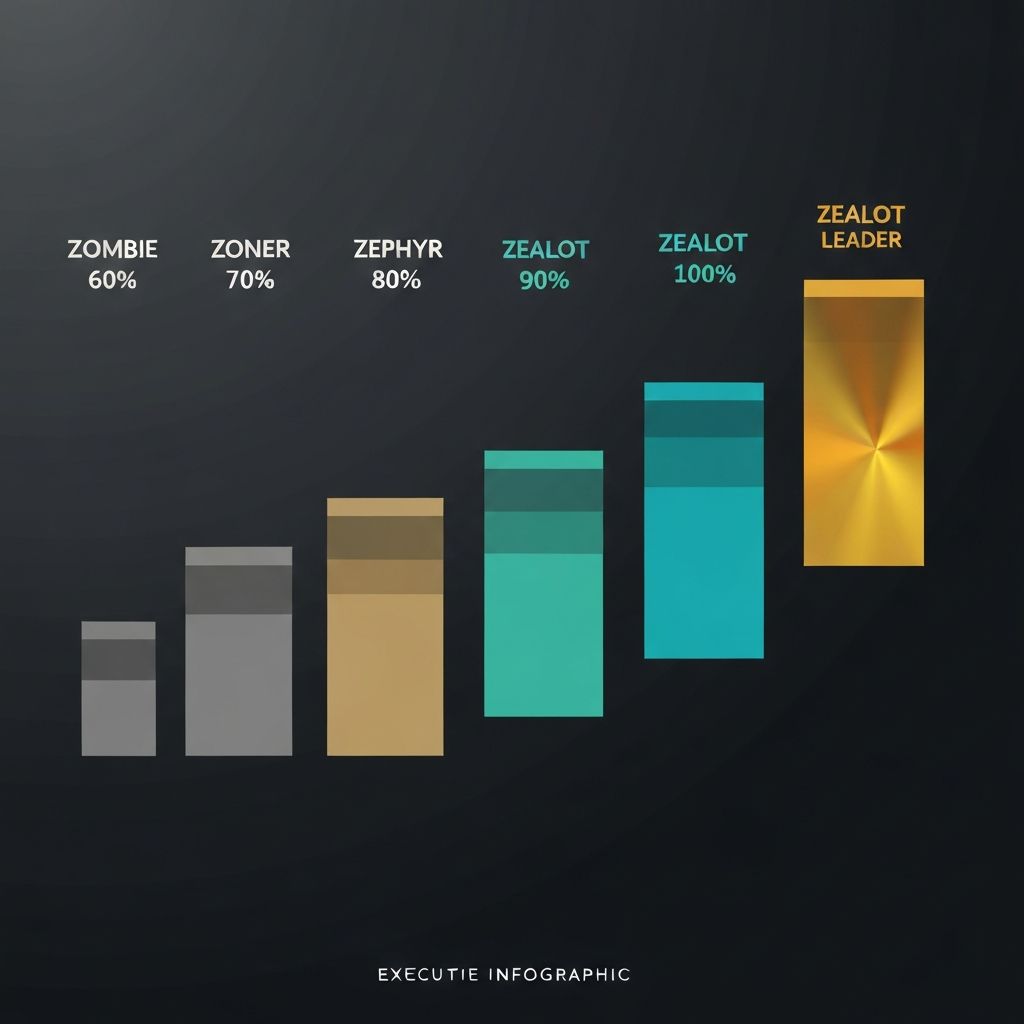
The Z Scale: Five Stages of Engagement
A diagnostic spectrum from complete disengagement to engagement multiplication. Your ZTI score places you on this scale with precision.
Characteristics
- •Minimal effort beyond avoiding termination
- •Negative influence on team morale
- •Actively undermines initiatives
- •High absenteeism, presenteeism
- •Cynical about any change efforts
Diagnostic Signal
Often the most talented people who've been burned. The Dormant Zealot hypothesis applies most strongly here.
Characteristics
- •Does exactly what's asked, nothing more
- •Clock-watching behavior
- •Avoids visibility and extra responsibility
- •Neutral to slightly negative influence
- •Waiting for something to change
Diagnostic Signal
The largest segment in most organizations. They're watching to see if engagement is safe.
Characteristics
- •Engaged when work aligns with interests
- •Selective contribution
- •Neither advocate nor detractor
- •Responds to environment signals
- •Potential energy waiting for activation
Diagnostic Signal
The tipping point. Small environmental changes can move them up or down rapidly.
Characteristics
- •Consistently exceeds expectations
- •Takes ownership beyond role
- •Positive influence on team
- •Advocates for organization
- •Continuous improvement mindset
Diagnostic Signal
The goal state. When environment supports it, Zealots emerge naturally from every other stage.
Characteristics
- •Actively develops others toward Zealot state
- •Creates psychological safety
- •Models AMP behaviors
- •Protects team from Zombie-creating forces
- •Builds sustainable engagement systems
Diagnostic Signal
Rare but reproducible. The LDI measures this leadership depth specifically.
The AMP Framework
Three levers that move people up the Z Scale. Based on Daniel Pink's research, operationalized for organizational transformation.
Freedom to decide how to work. Not the absence of direction, but the presence of trust.
What it looks like:
- • Control over methods and approaches
- • Input into timelines and priorities
- • Freedom to experiment and iterate
- • Trust to make decisions without approval
What destroys it:
- • Micromanagement
- • Approval bottlenecks
- • Prescriptive process mandates
- • Punishment for initiative
Opportunities to grow and develop. The feeling of getting better at something that matters.
What it looks like:
- • Challenging work that stretches abilities
- • Clear feedback on performance
- • Learning opportunities and growth paths
- • Recognition of skill development
What destroys it:
- • Repetitive work with no challenge
- • No feedback or only negative feedback
- • Training as punishment not development
- • Expertise ignored or devalued
Connection between daily work and mission. The answer to "why does this matter?"
What it looks like:
- • Clear line of sight to customer impact
- • Understanding of organizational mission
- • Work that aligns with personal values
- • Meaningful contribution to something larger
What destroys it:
- • Disconnection from end users
- • Constantly shifting priorities
- • Values-action misalignment
- • Work that feels meaningless
The AMP Diagnostic
The ZTI measures each AMP dimension separately, producing three subscores plus an overall Z Scale position. This precision allows targeted interventions—you don't fix Autonomy problems with Purpose solutions.
The Five Ideals
Environmental conditions that enable Zealot emergence. From Gene Kim's research, adapted for engagement transformation.
Keep work simple and local to teams. Reduce dependencies and complexity that slow progress and obscure ownership.
Create conditions where people can focus deeply, work flows smoothly, and teams find joy in their work.
Continuously improve how work gets done. Make the work itself better, not just the outcomes.
Foster an environment where people feel safe to speak up, take risks, and learn from mistakes without fear.
Everything we do should ultimately serve the customer and create value for those we serve.
The ZSA (Z Scale Assessment) measures your organization against all Five Ideals, producing an environmental health score.
Take the ZSAThe Three Ways
From DevOps and The Phoenix Project, adapted for engagement transformation. The operational principles that sustain Zealot environments.
Optimize work streams to eliminate bottlenecks and create smooth, predictable delivery. Work should move left to right without stopping.
Create rapid feedback loops to detect and correct problems before they become costly failures. Feedback should flow right to left immediately.
Foster a culture of experimentation and improvement that drives innovation and resilience. Learning should be embedded in daily work.
Apply the Framework
Start with diagnosis. The ZTI takes 10 minutes and provides your precise Z Scale position with AMP subscores. From there, the pathway becomes clear.